

Phrase first
Start with two or three notes and make them feel intentional. A short phrase with good timing usually sounds better than a full scale played without direction.
Guitar practice
Learn how to improvise on guitar with short phrases, chord-tone targets, scale choices, rhythm ideas, call-and-response practice, and fretboard habits that make solos sound connected.
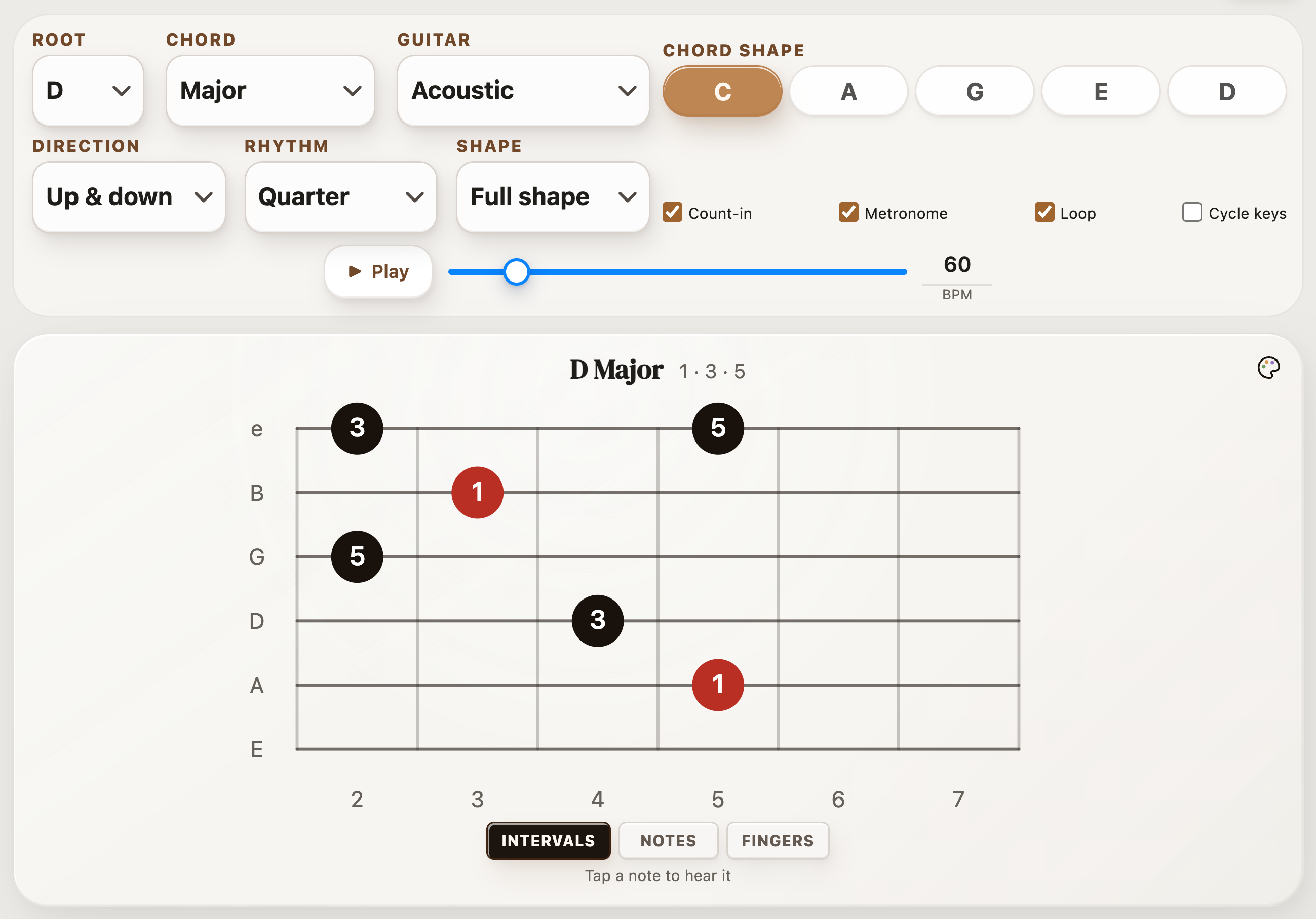
These exercises focus on phrasing, timing, chord tones, and fretboard control. Use any simple backing loop, but make the improvised line the main practice target.
Improvising is not about running scale shapes. It is about making short phrases that react to the harmony and rhythm.
Start with two or three notes and make them feel intentional. A short phrase with good timing usually sounds better than a full scale played without direction.
Listen for the chord underneath the line and land on a stable note from that chord. Roots, thirds, fifths, and sevenths make the solo sound connected to the progression.
Repeat a rhythmic idea before changing notes. Most improvised lines become clearer when the rhythm has a shape the listener can follow.
Pause between ideas. Silence gives the next phrase a place to land and keeps improvisation from turning into constant motion.
| When you need... | What to do on guitar |
|---|---|
| To get the idea under your hands | Play one how to improvise on guitar example slowly with a single voicing family before changing anything else. |
| To make the part cleaner | Fix the weakest chord change or rhythm accent first, then return to the full progression. |
| To make it your own | Change one variable at a time: key, capo position, rhythm, register, chord color, or scale focus. |
| To test it in StrumForge | Open a related loop when you want diagrams, groove playback, and timing practice. |
Use the page as a starting point, then move into the app when you need sound, timing, diagrams, and scale context.
Short answers for players using this page as a practice or writing reference.
Start with short phrases, target chord tones, repeat rhythmic ideas, and leave space between lines before adding speed.
Use StrumForge to create a backing loop, then practice the phrasing exercises on this page over that harmony.
Yes. Once the loop works, change key or capo position so the idea becomes a fretboard exercise instead of a memorized shape.